
20 Oct Cheeses from the Serranía and the White Villages: How to Recognise Artisan Production
Behind an artisan cheese are milk, time, temperature, skill and landscape. Understanding that process transforms a tasting.
Raw Material Matters
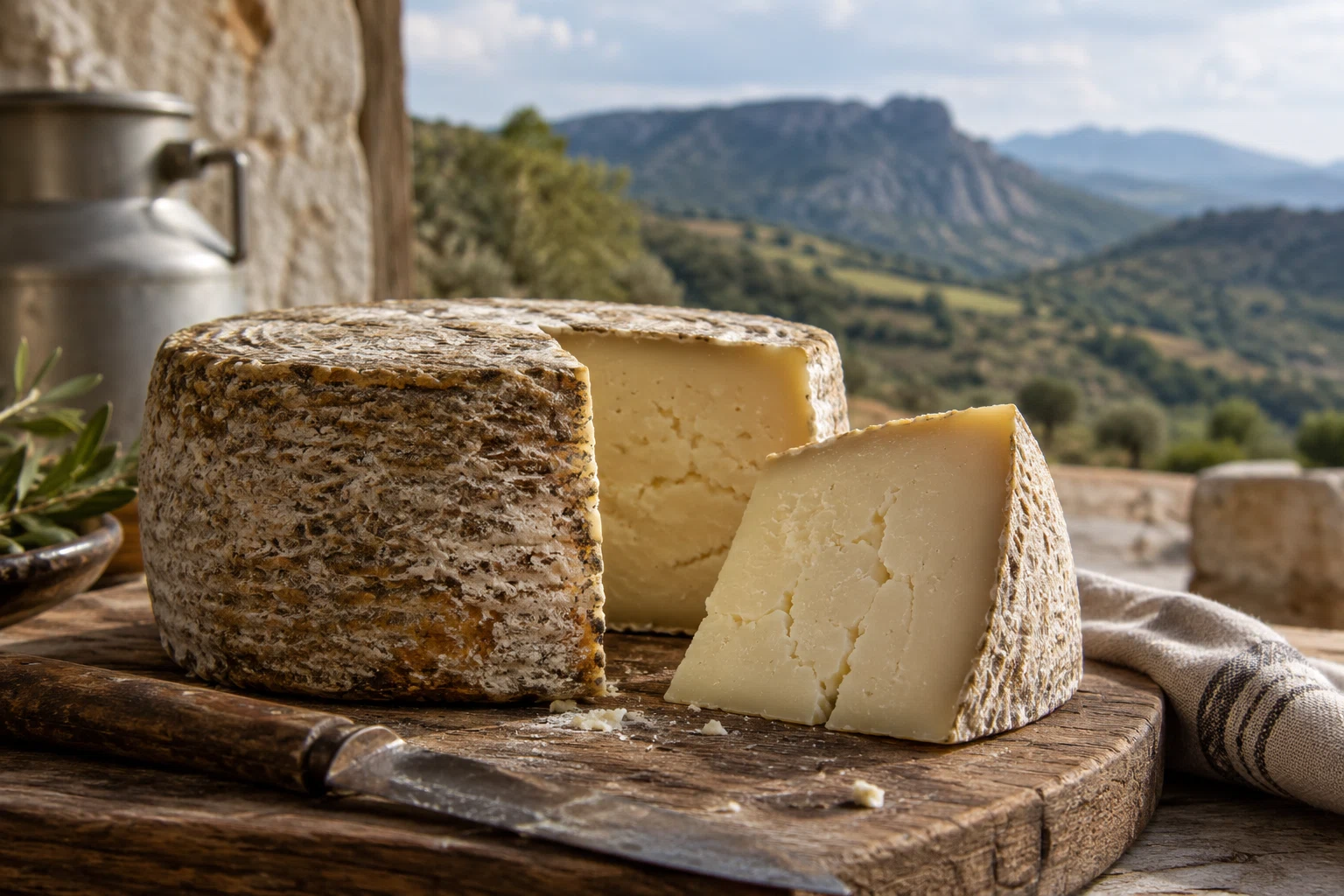
The type of milk and its treatment influence the result, but are not enough to assess a cheese. Fermentation, coagulation, moulding, salting and maturation also play a role. Obtain exact information from the producer and the product label.
What to notice during a tasting
Look at the rind and paste, smell the cheese before tasting and allow it to warm up. In the mouth, consider moisture, elasticity, graininess, intensity and finish. The aim is to recognise differences rather than impose a universal ranking.
Artisan Production Without Clichés
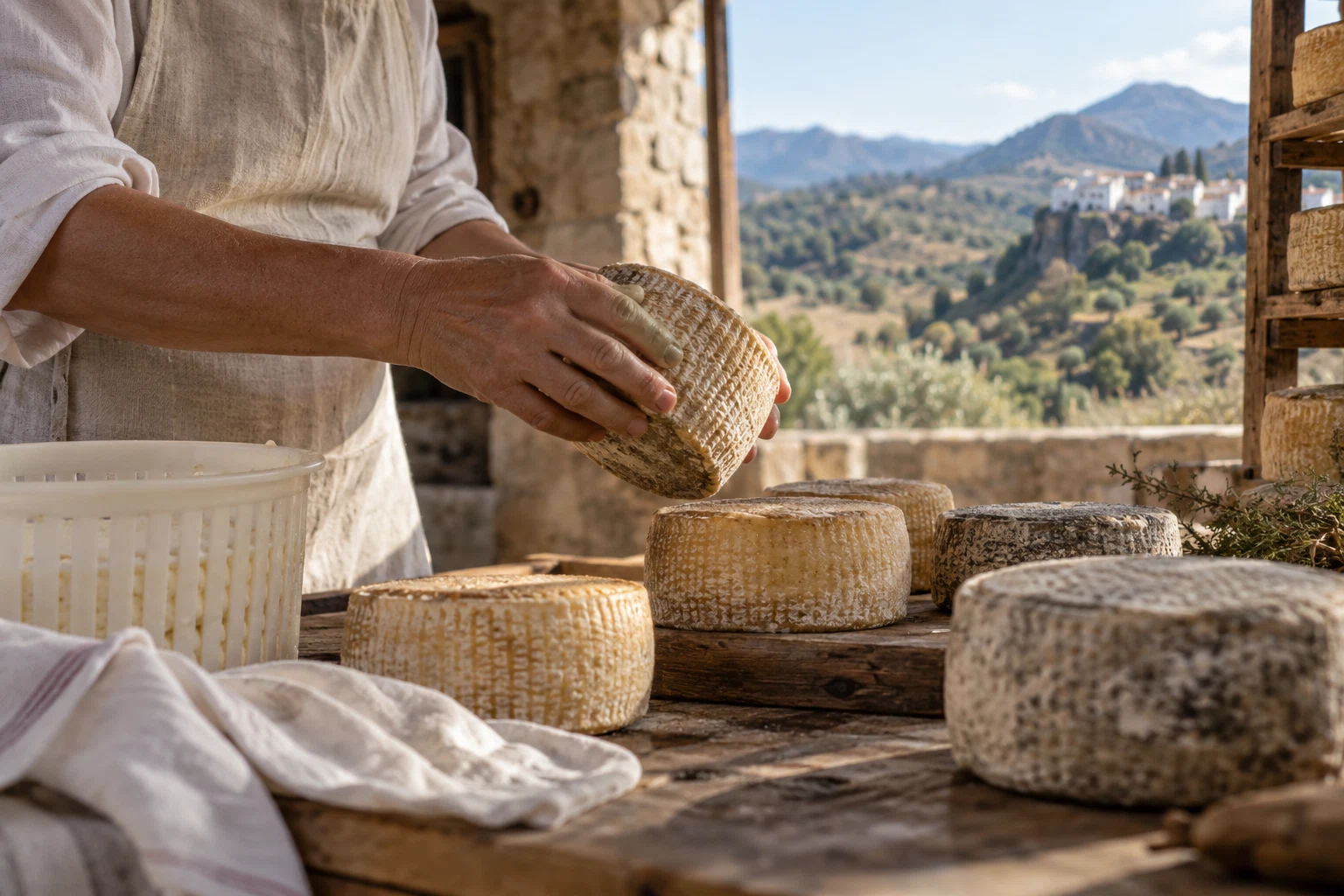
Artisan production does not have to look rustic or irregular. It is defined by specific production decisions and a scale of work that the producer should explain. Avoid attributing awards, designations or methods that have not been verified.
Respectful Visits to a Cheesemaker
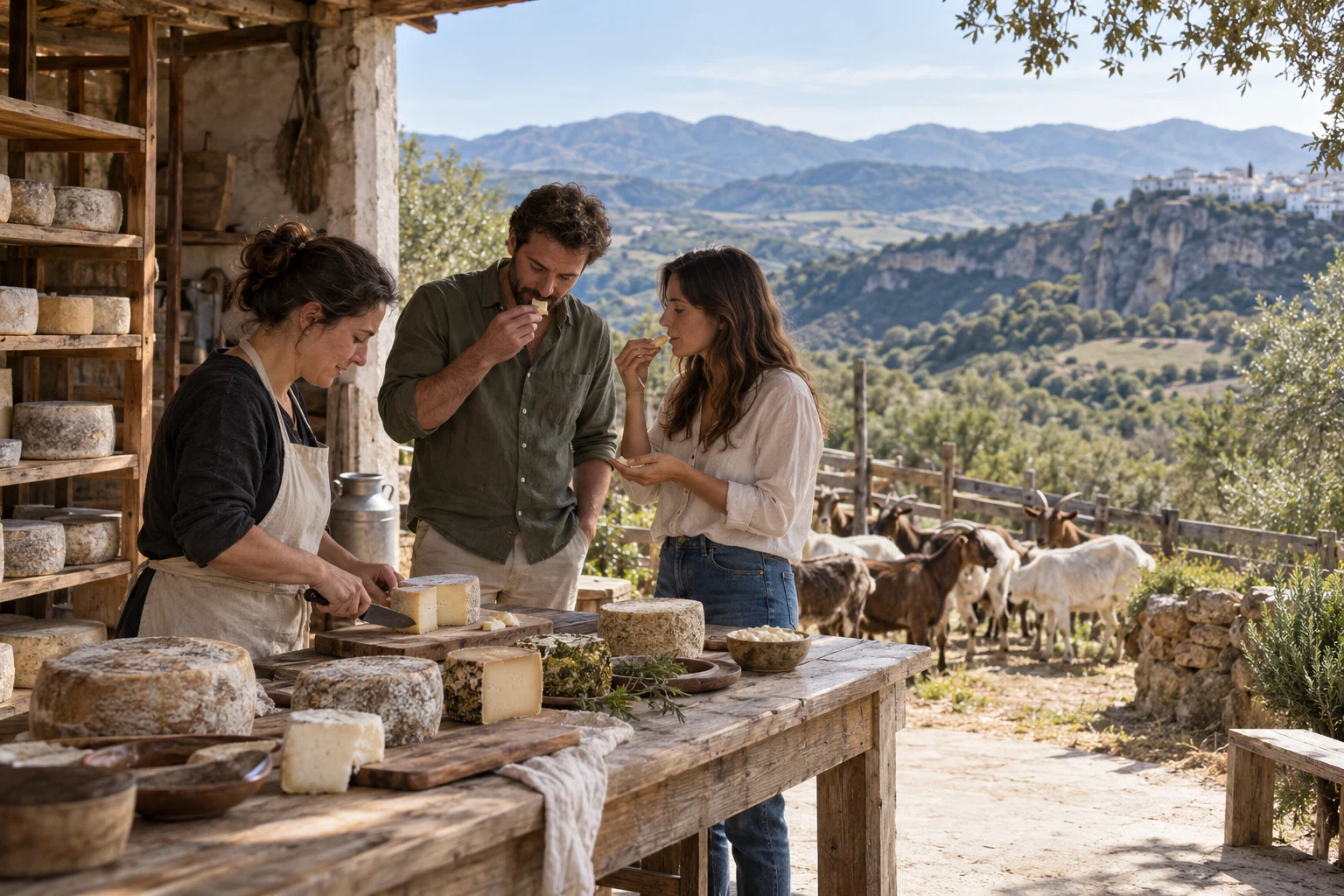
Production areas have hygiene requirements and are not always open to visitors. The experience must adapt to what the establishment permits: conversation, demonstration, a partial tour or a tasting. Authenticity also means respecting those limits.
The 2B Experiences Approach
Each proposal is designed around your main interest, your starting point and the time available. Before confirmation, schedules, activities, capacity, accessibility and dietary requirements are checked with the partners involved. Personalisation is therefore based on actual services rather than a generic promise.
The approach combines privacy, local interpretation and an unhurried pace. This means allowing time to talk, observe and enjoy, as well as coordinating transport when it forms part of the experience. Producer names, menus, prices and availability should only be published once they have been verified.
Frequently Asked Questions
Are all local cheeses the same?
No. Milk, process, maturation and each producer’s approach vary.
Can I enter the production area?
Only when the cheesemaker permits it and the hygiene requirements are met.
How should I store the cheese I buy?
Always follow the instructions of the producer or the label.
Take the next step
Discover cheese through the craft rather than the plate alone.
