
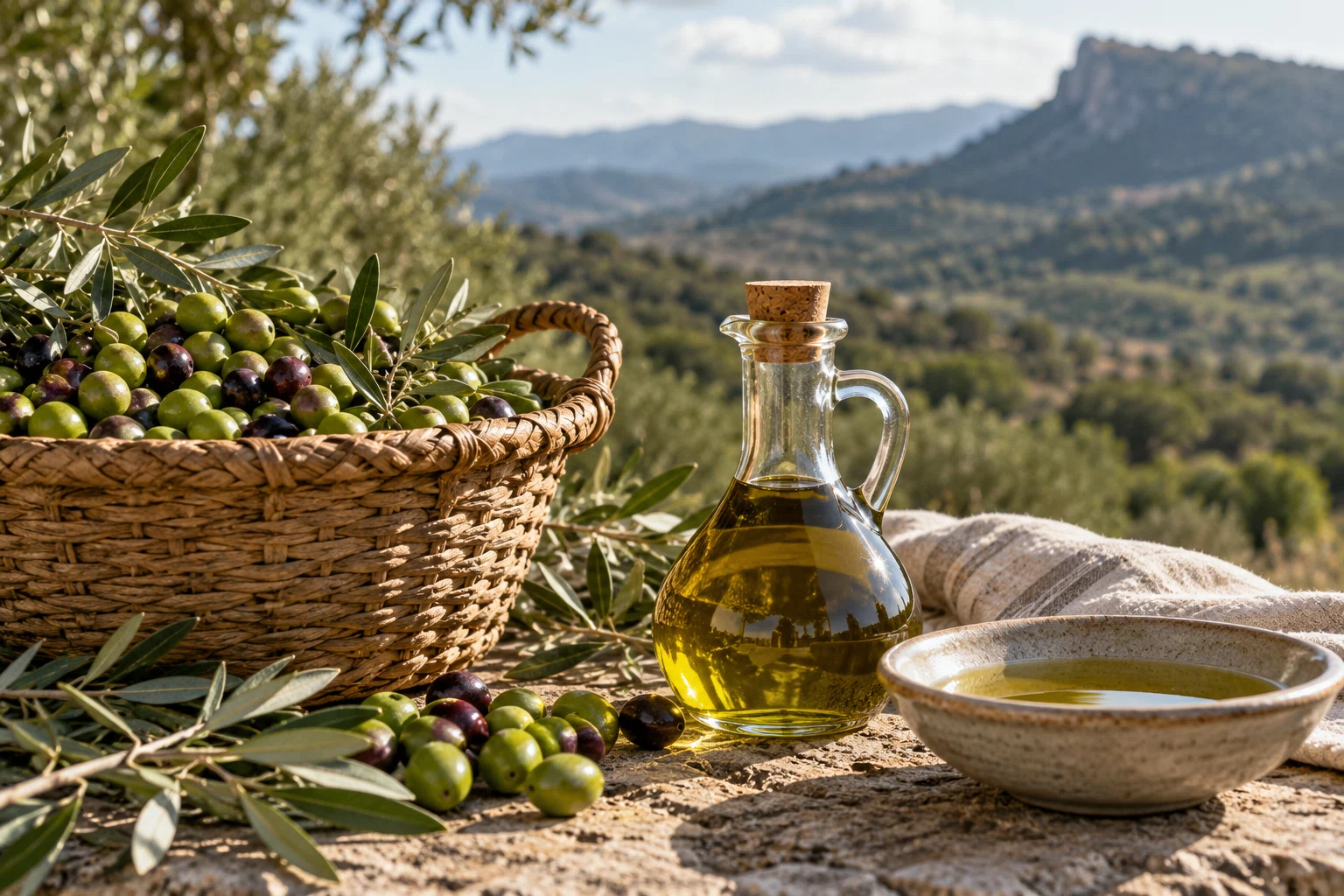
20 Oct Extra Virgin Olive Oil in Ronda: From the Olive Grove to a Mindful Tasting
Olive oil is part of the landscape and everyday cooking, but a tasting reveals it as a complex product whose character can vary.
It starts with the fruit
Variety, ripeness, the condition of the olives and speed of processing influence the oil. Ask the producer before describing a specific product; a photograph of an olive grove alone cannot establish its production method or quality.
What happens at the mill
Reception, cleaning, crushing, malaxation and separation are stages in a process intended to extract the oil while preserving its characteristics. Facilities and parameters vary. A responsible visit explains the real process rather than staging a fictitious demonstration.
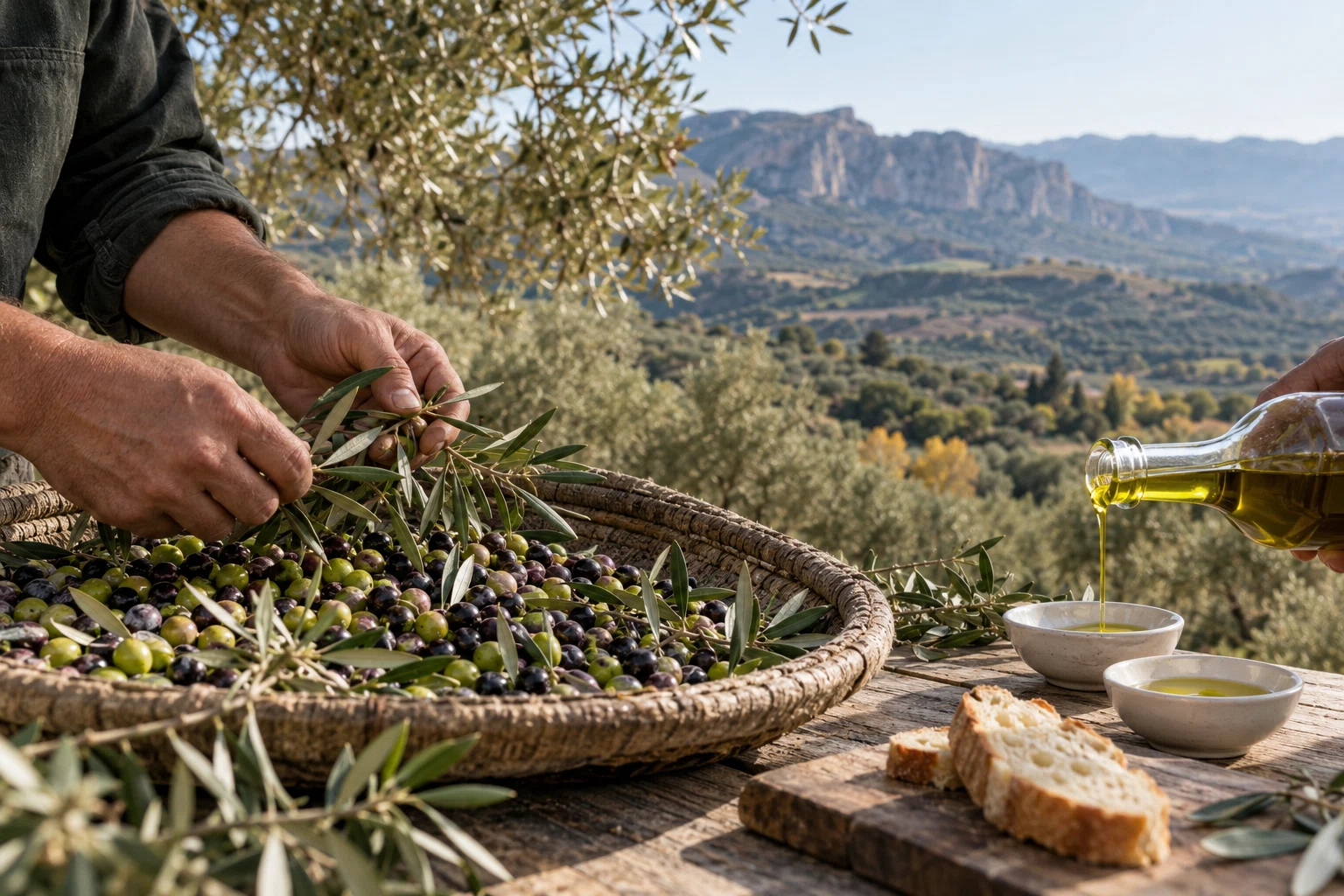
How to Approach a Tasting
Hold the container to warm the sample gently, smell it and then taste a small quantity. Assess aromas, bitterness, pungency, balance and finish. Colour is not the main criterion of sensory quality.
From analysis to the table
After tasting, see how the oil changes with bread, vegetables or other simple foods. This connects technical language with cooking. Pairings should suit the actual oil rather than be imposed as universal combinations.
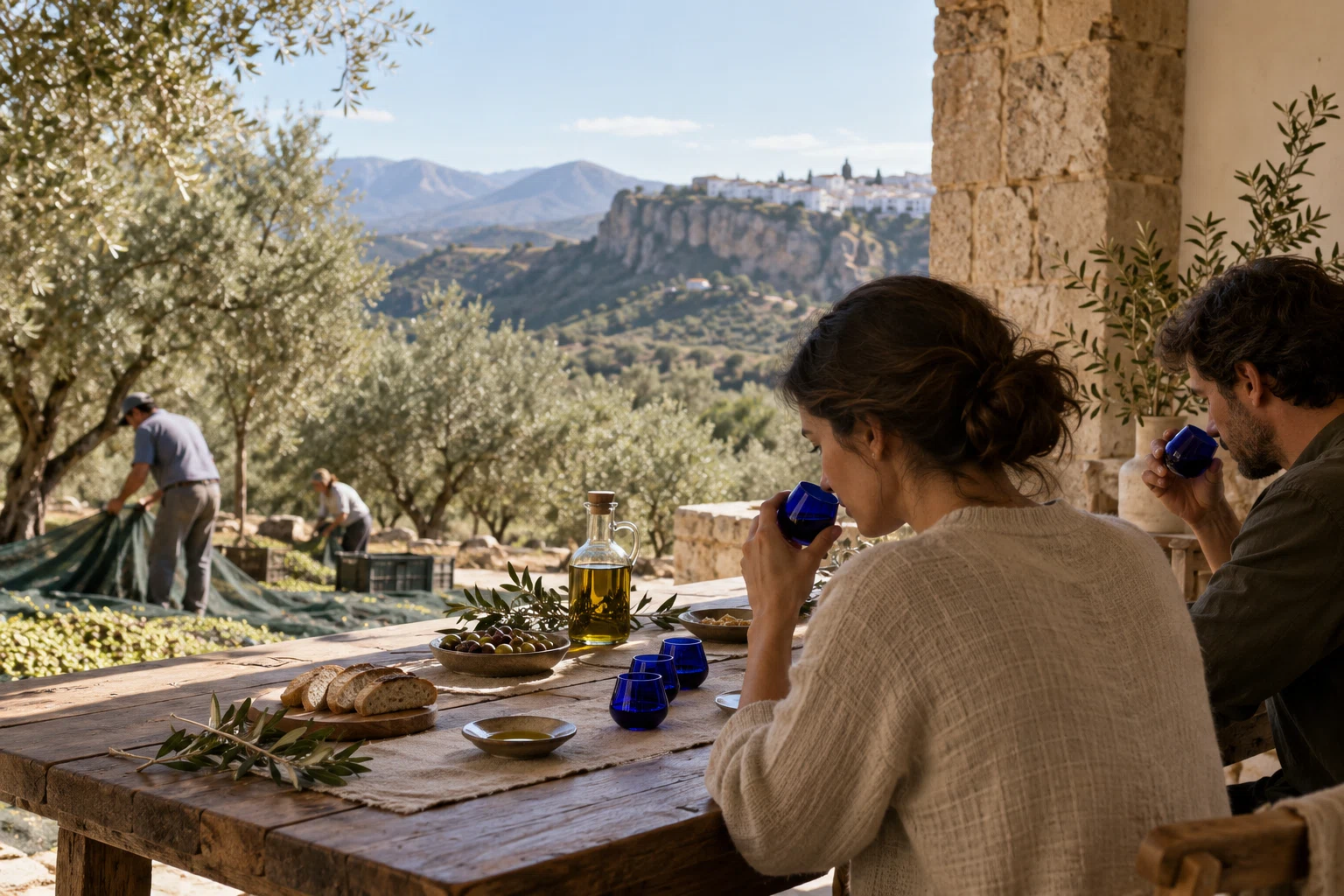
The 2B Experiences Approach
Each proposal is designed around your main interest, your starting point and the time available. Before confirmation, schedules, activities, capacity, accessibility and dietary requirements are checked with the partners involved. Personalisation is therefore based on actual services rather than a generic promise.
The approach combines privacy, local interpretation and an unhurried pace. This means allowing time to talk, observe and enjoy, as well as coordinating transport when it forms part of the experience. Producer names, menus, prices and availability should only be published once they have been verified.
Frequently Asked Questions
Is greener oil always better?
No. Colour alone does not determine quality.
Are bitterness and pungency defects?
They can be positive attributes in some oils; assessment depends on balance.
Can I visit the mill throughout the year?
Visits depend on availability, and activity changes outside the olive processing season.
Take the next step
Discover olive oil through the fruit, the production process and a guided tasting in the region.
