
20 Oct How to Taste Ibérico Ham: Texture, Aroma, Slicing and Finish
Tasting Ibérico ham means observing how aroma, texture and flavour change within the same ham. There is no need for complicated vocabulary.
Temperature and time
Serve the ham under conditions that allow its aroma and texture to emerge. A slice that is too cold can conceal these qualities. Prepare it shortly before serving and follow the recommendations of the professional responsible.
What to look at
Observe colour, fat marbling, sheen and flexibility. These features help describe the sample but are not enough to certify origin, quality or the animal’s diet. That information comes from traceability and labelling.
Aroma, texture and taste
Bring the slice closer without rushing, notice the aromatic intensity and taste a small amount. Pay attention to how it melts, its salinity, balance and how long the flavour lasts. Comparing different parts of the ham can be particularly informative.
The role of cutting
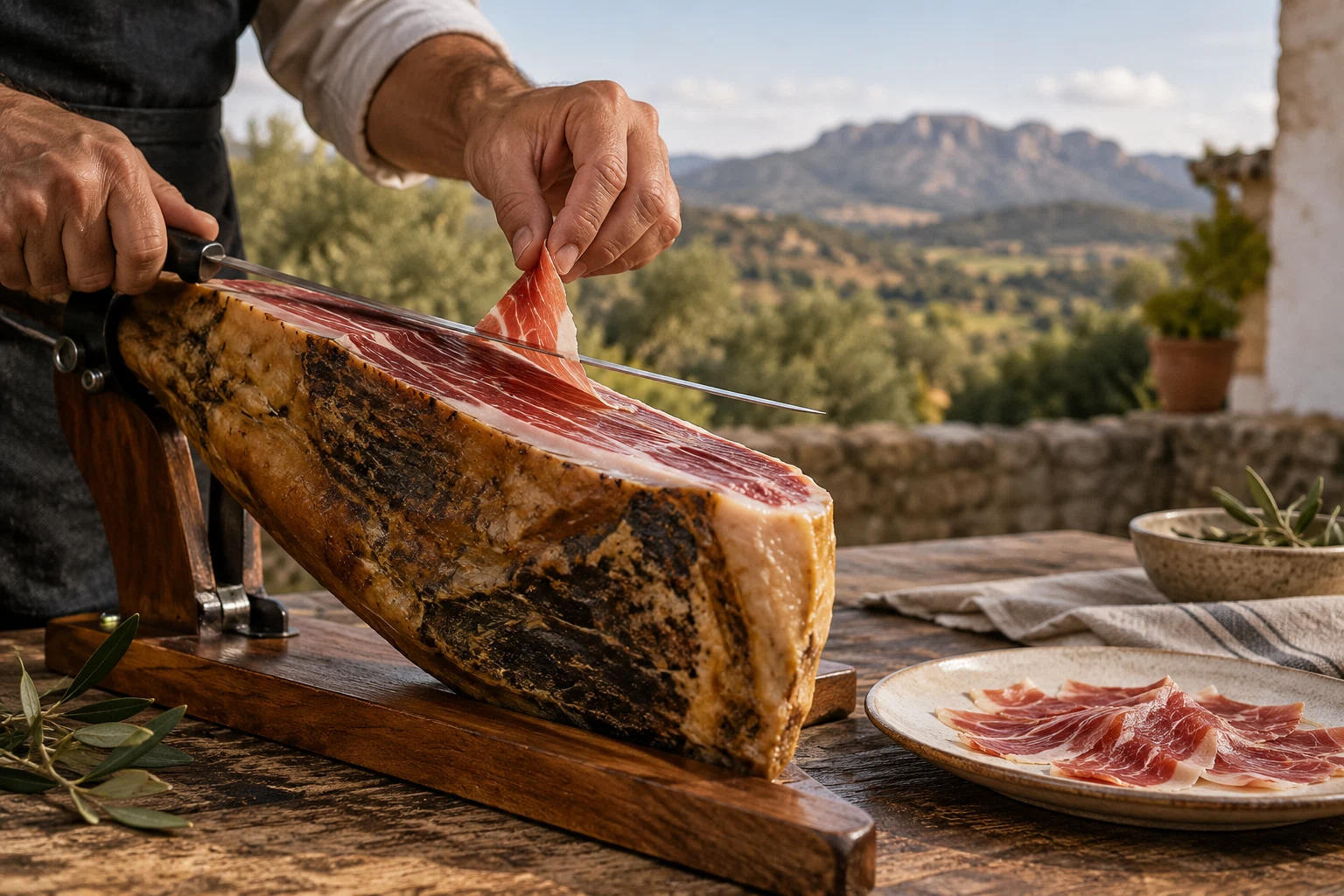
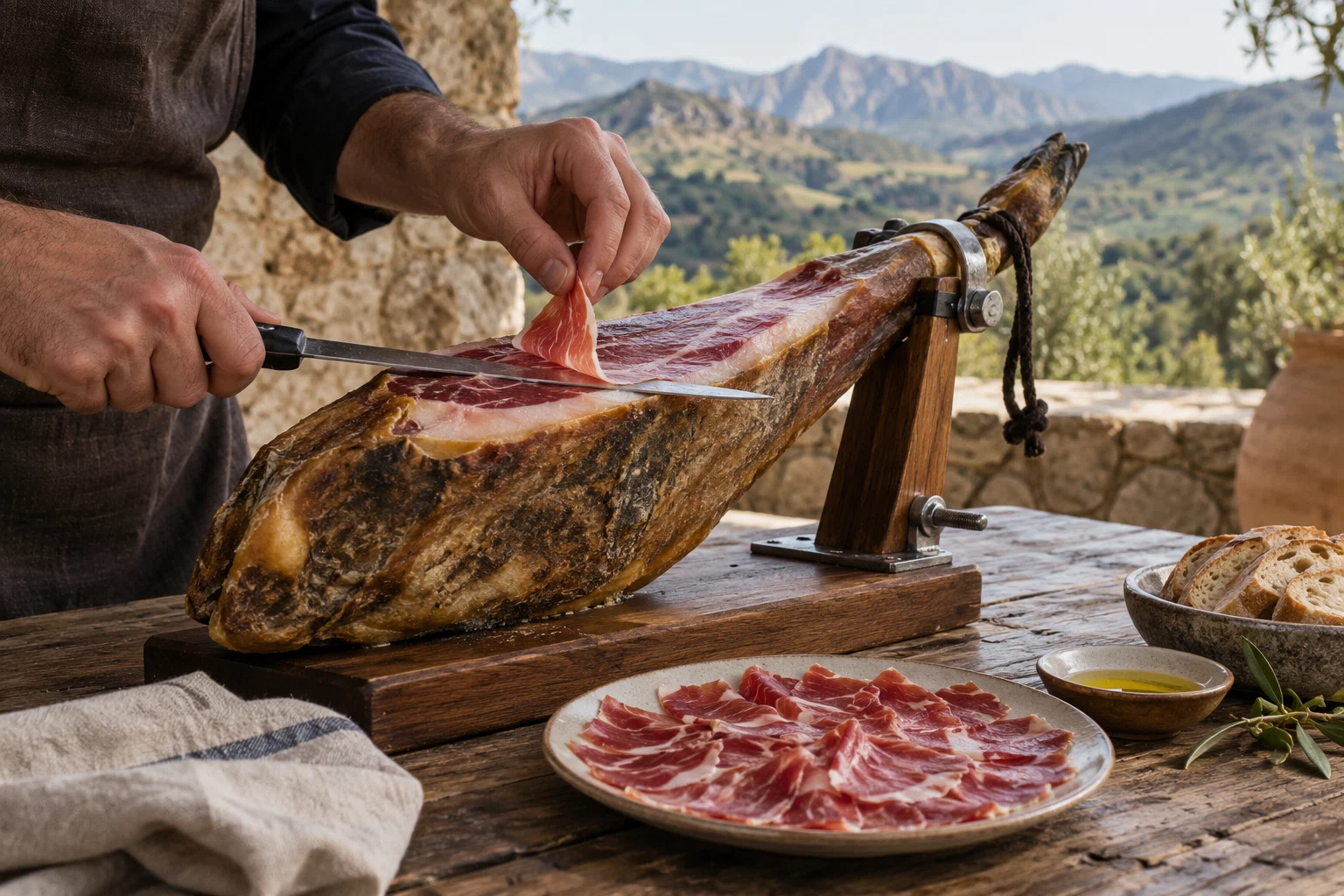
Thickness, size and the proportion of fat influence perception. A slicing demonstration therefore adds real substance. The professional’s movements show how service and product form part of the same experience.

The 2B Experiences Approach
Each proposal is designed around your main interest, your starting point and the time available. Before confirmation, schedules, activities, capacity, accessibility and dietary requirements are checked with the partners involved. Personalisation is therefore based on actual services rather than a generic promise.
The approach combines privacy, local interpretation and an unhurried pace. This means allowing time to talk, observe and enjoy, as well as coordinating transport when it forms part of the experience. Producer names, menus, prices and availability should only be published once they have been verified.
Frequently Asked Questions
Should I serve it with bread?
Try the ham on its own first; accompaniments can be introduced afterwards.
Does colour determine quality?
Not on its own. Quality and category need traceability information.
How many samples should I taste?
A few carefully explained samples make the differences easier to appreciate.
Take the next step
Learn to recognise nuances through a guided tasting and freshly sliced ham.
