
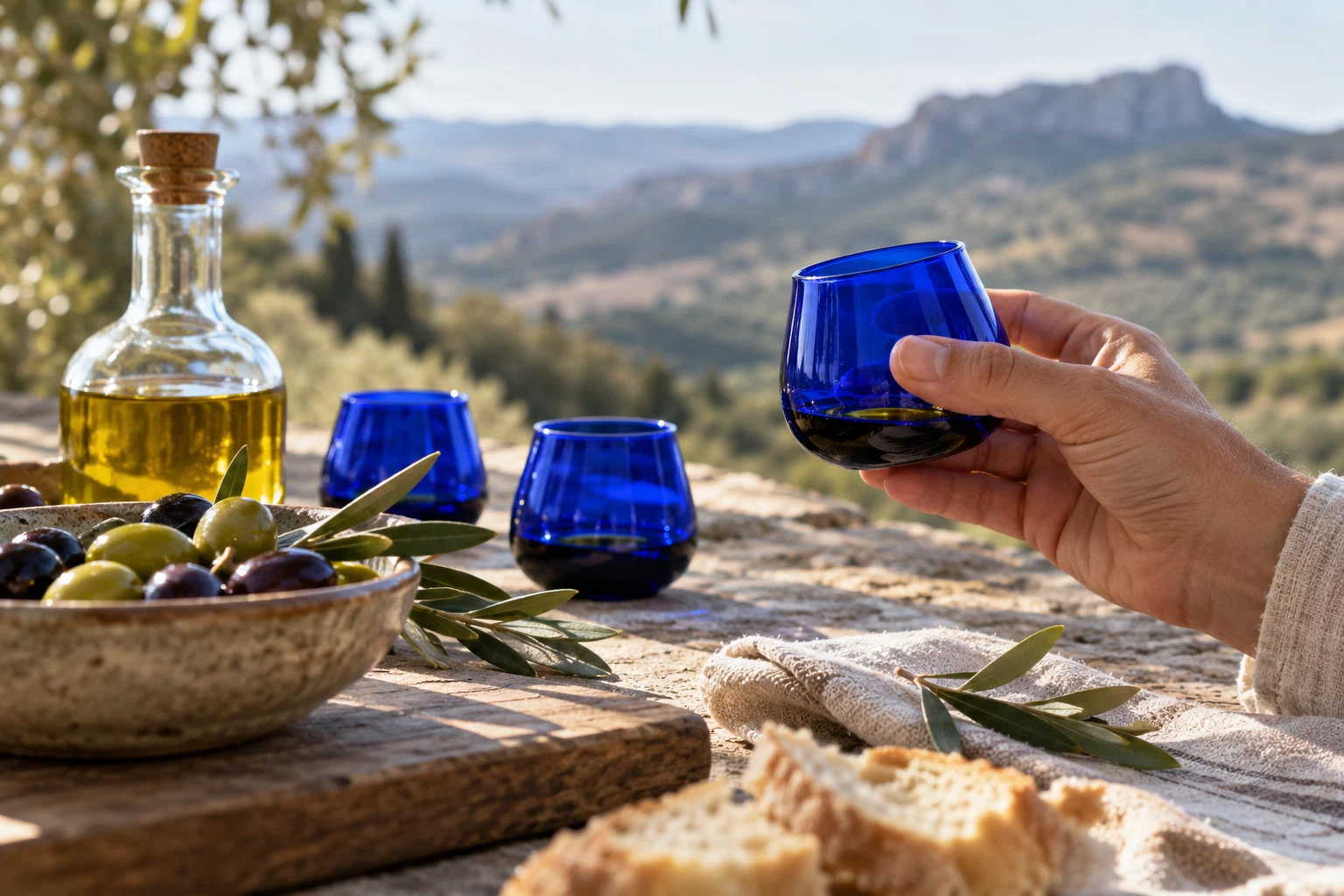
20 Oct How to Taste Olive Oil: A Practical Guide to Aromas, Bitterness and Pungency
Oil tasting may seem technical, but it starts with three simple actions: smell, taste, and compare.
Prepare the sample
Use a clean container and a small quantity. Gently warming the oil helps release its aromas. Avoid perfume, coffee and strongly flavoured foods just before tasting.
Explore the aromas
Bring the container towards your nose and take short sniffs. Depending on the oil, you may notice plants, fruit, grass or nuts. Descriptors help organise what you perceive; you do not have to identify every aroma.

Taste Without Fearing Pungency
Spread a small quantity around your mouth and gently draw in a little air. Notice perceived sweetness, bitterness, pungency, intensity and balance. Do not judge an oil by one sensation alone.
Compare and take notes
Comparing two samples teaches more than a list of terms. Use your own words to note intensity, aromas, structure and finish. In a professional session, the taster will explain which attributes and possible defects are being assessed.

The 2B Experiences Approach
Each proposal is designed around your main interest, your starting point and the time available. Before confirmation, schedules, activities, capacity, accessibility and dietary requirements are checked with the partners involved. Personalisation is therefore based on actual services rather than a generic promise.
The approach combines privacy, local interpretation and an unhurried pace. This means allowing time to talk, observe and enjoy, as well as coordinating transport when it forms part of the experience. Producer names, menus, prices and availability should only be published once they have been verified.
Frequently Asked Questions
Do I need bread?
Taste the oil on its own for the initial assessment. Bread can be used afterwards to explore how it works with food.
Does colour matter?
It is not the main criterion in sensory tasting.
Do I have to swallow the oil?
You do not need to swallow it when comparing several samples.
Take the next step
Find out why two oils can transform the same food differently.
